
How to Lower Your Mortgage Payment in Utah by Buying a Home With Rental Income

One of the most practical ways to lower your monthly housing costs in Utah is to buy a home that also creates rental income.
That could mean buying a home with a basement apartment, an accessory dwelling unit, a mother-in-law setup, a duplex-style layout, or even a property where your current home becomes the rental, and your next home becomes your primary residence.
The main idea is simple: instead of carrying the entire mortgage by yourself, part of the payment is offset by rent. For many buyers in Northern Utah, especially in Davis County, Weber County, and Salt Lake County, this can make a larger home or a better location feel much more realistic.
It does not mean the numbers magically work for everyone. It also does not mean every basement bedroom counts as a rentable apartment. But when it is done correctly, rental income can be one of the smartest ways to make homeownership more affordable in Utah.
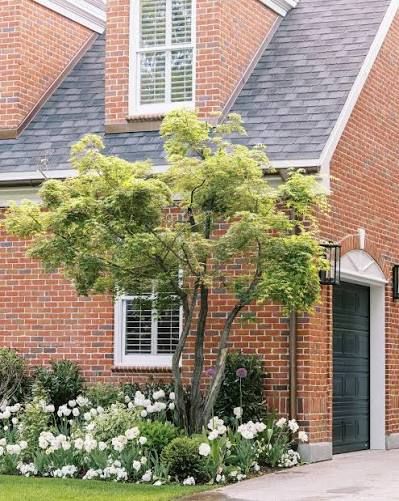
What It Means to Buy a Home With Rental Income
Buying a home with rental income usually means one of two things.
The first option is buying a property where you live in part of the home and rent out the rest. This is often called house hacking.
In Utah, that might look like buying a single-family home with a basement apartment in Bountiful, Ogden, Layton, South Salt Lake, Kaysville, Clearfield, or West Jordan. You live upstairs and rent the basement, or you live in the basement and rent the larger upstairs portion.
The second option is keeping your current home as a rental and buying another primary residence.
For example, maybe you own a home in Brigham City, Roy, Clinton, North Ogden, or Syracuse with a low mortgage payment. Instead of selling it, you rent it out and use that future rental income to help qualify for your next home.
Both strategies can work, but they are not exactly the same from a financing standpoint.
Can Rental Income Help You Qualify for a Mortgage in Utah?
Yes, rental income can sometimes help you qualify for a mortgage, but it depends on the loan type, the property, the lease, your history, and the lender’s guidelines.
This is where buyers can get confused.
People will hear “You can use rental income to qualify” and assume it means the full rent amount automatically counts as income. Usually, it is more nuanced than that.
A lender may count a portion of the expected rent, which can still make a meaningful difference in your overall qualification. For example, with FHA loans, you may be able to use up to 75% of the projected rental income based on the value determined by the appraiser. With conventional loans, that number is often closer to 50% of the projected rental income. Even using a portion of the rent can help strengthen your buying power and open up more options than you might expect.
This is why the first step is not touring houses.
The first step is talking to a lender who understands rental income, house hacking, ADUs, and Utah loan programs. You need someone who can look at the full picture before you build your plan around numbers that may or may not count.
House Hacking in Utah: Buying a Home With a Basement Apartment
House hacking is one of the more realistic ways buyers in Northern Utah can lower their monthly payment.
Instead of buying the cheapest house possible, you may be able to buy a slightly larger home with a rentable basement and end up with a lower out-of-pocket payment each month.
For example, a buyer may look at a $430,000 townhome with no rental income and feel stretched.
But another buyer may look at a $575,000 single-family home with a basement apartment that rents for $1,400 per month. The mortgage may be higher on paper, but the rent may offset enough of the payment that the monthly cost feels more manageable.
That does not mean the more expensive home is always the better choice. It means the payment should be analyzed differently.
You are not just asking, “What is the mortgage?”
You are asking, “What is my actual monthly cost after rental income?”
That is a very different conversation.
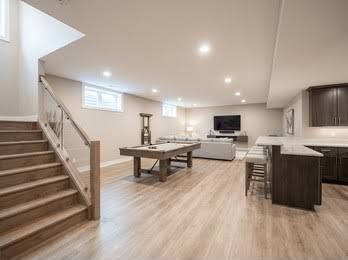
What Makes a Basement Apartment Actually Rentable?
Not every basement setup is the same.
A bedroom, bathroom, and mini fridge do not automatically make a basement a good rental. If you are buying with rental income in mind, you want to look closely at the layout and functionality.
A stronger rental setup usually has a private entrance, a real kitchen or kitchenette, a bathroom, decent natural light, parking access, and separation between the owner’s space and the tenant’s space.
Privacy matters.
Sound matters.
Parking matters.
Laundry matters.
Ceiling height, windows, and overall livability matter.
In areas like Salt Lake County, where basement apartments and ADUs are common, tenants may have more options. A basement rental that feels dark, awkward, or poorly finished may not bring in the rent you were hoping for.
In Davis County and Weber County, demand can still be strong, especially near schools, hospitals, downtown Ogden, Hill Air Force Base, Weber State, commuter routes, and areas with limited affordable rentals. But the rental still needs to make sense for a real person to live in.
Legal ADU vs. Mother-in-Law Apartment vs. “Potential Rental”
This is a very important distinction.
A listing may say “mother-in-law apartment,” “basement apartment,” “ADU potential,” or “separate entrance,” but those phrases do not always mean the space is legally approved as a rental unit.
In Utah, accessory dwelling unit rules can vary by city and county. What is allowed in Ogden may not be exactly the same as what is allowed in Bountiful, Farmington, Layton, Salt Lake City, Sandy, or West Valley.
Some cities allow internal accessory dwelling units under certain conditions. Some require owner occupancy. Some have parking requirements. Some have restrictions based on zoning, lot size, utilities, or building code.
Before you buy a home because of rental income, you want to verify what is actually allowed.
That may mean checking city rules, asking about permits, reviewing disclosures, confirming whether the unit has been legally recognized, and talking through risk with your agent and lender.
A property can still have rental potential, but there is a difference between “this has been legally used as a rental” and “this basement looks like it could be rented someday.”
Those are not the same thing.
Keeping Your Current Utah Home as a Rental
Another way to lower your next payment is by keeping your current home and renting it out.
This is common for homeowners who bought when prices or interest rates were lower. Maybe their current mortgage is manageable, but their family has outgrown the home. Or maybe they want to move closer to work, schools, family, or a different part of Northern Utah.
Instead of selling, they wonder:
Can I rent out my current house and use that rent to qualify for my next one?
Sometimes, yes.
If your current home can rent for more than your mortgage payment, taxes, insurance, and HOA fees, it may help your overall financial picture. But again, the lender will decide how much of that rental income can be used.
You will likely need to know your estimated rent, your current mortgage payment, your equity position, and whether you have reserves.
A lender may also ask for a signed lease before closing on the next home. In some cases, they may use market rent from an appraisal form. The details depend on the loan program and your full financial profile.
This is where a good lender is extremely helpful. Not just someone who says yes or no, but someone who can explain the why behind the numbers.
DSCR Loans: What They Are and Why Buyers Ask About Them
You may hear people talk about a DSCR loan when they want to buy an investment property but their personal income does not qualify under the traditional criteria.
DSCR stands for debt service coverage ratio.
In simple terms, a DSCR loan looks more at the property’s rental income than your personal income. The lender wants to know if the property can financially support itself based on the rent compared to the payment.
This can be helpful for investors, business owners, self-employed buyers, or people with strong assets but insufficient traditional income on paper.
But DSCR loans are not the same as a normal primary residence mortgage.
They are usually investment-property loans. They may require a larger down payment. The interest rate may be higher than a standard loan. The terms can vary a lot by lender. They are not always the best fit for someone who simply wants to buy their next primary home.
So yes, DSCR loans can be a tool.
But they are not always the first tool I would reach for.
For many Utah buyers, it may make more sense to first look at conventional financing, FHA options, using projected rental income, keeping the current home as a rental, or buying a primary residence with an ADU or basement apartment.
The Real Question: What Is Your Out-of-Pocket Payment?
When buyers are trying to make a smart move, the most important number is not always the purchase price.
It is the monthly out-of-pocket cost.
A $500,000 home with no rental income may cost more each month than a $625,000 home with a strong basement rental.
At the same time, a rental property that looks good online may not actually cash flow once you factor in vacancy, repairs, utilities, maintenance, taxes, insurance, and management.
This is why you want to run the numbers conservatively.
Do not assume the highest possible rent.
Do not ignore repairs.
Do not forget that tenants move out.
Do not spend every dollar you have just to make the purchase work.
Rental income can make homeownership more affordable, but it should not make you financially fragile.
The goal is not to barely survive the payment.
The goal is to buy something that gives you more breathing room.
What to Look for in a Utah House Hack
If you are shopping in Northern Utah with rental income in mind, look for homes that have flexible layouts.
A few things I would pay attention to:
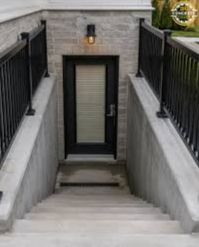
Private entrance. This is one of the biggest factors. Tenants generally do not want to walk through your living room to get to their space.
Parking. This can make or break the rental setup, especially in tighter neighborhoods or winter months.
Kitchen setup. A true second kitchen or kitchenette can increase rentability, but you need to verify what is allowed.
Laundry access. Separate laundry is ideal. Shared laundry can work, but it needs to be practical.
Natural light. Basement apartments with large windows or walkout entrances tend to feel more livable.
Location. Proximity to jobs, universities, hospitals, public transit, freeway access, and downtown areas can impact rental demand.
Condition. A rental space does not need to be luxury, but it does need to feel clean, safe, and functional.
In places like Ogden, South Ogden, Clearfield, Layton, Bountiful, Millcreek, Murray, and Salt Lake City, the right layout can matter just as much as the square footage.
A house with a slightly smaller footprint but better separation may be a stronger rental option than a larger house with an awkward basement.
What Sellers Should Know if Their Home Has Rental Potential
If you are selling a home in Utah with a basement apartment, ADU, separate entrance, or rental history, that can be a major selling point.
But it needs to be presented carefully and accurately.
Buyers care about rental income, but they also care about risk. If the rental setup is legal and permitted, or has a documented income history, it should be clearly organized before going to market.
Helpful items may include lease history, average rent, utility setup, parking details, separate entrance information, photos of the unit, and any permits or city documentation you have.
If the space is not a legal ADU, you do not want to overpromise. Instead, the marketing should focus on the layout, flexibility, and potential uses without making claims that cannot be verified.
This matters because buyers use this information to decide whether the home fits their financial plan.
The better the rental story is presented, the easier it is for a buyer to understand the value.
A Few Things to Be Careful About
Buying with rental income can be smart, but it is not something to do casually.
You need to understand the financing, city regulations, rental demand, the property's condition, and your comfort level with being a landlord.
You also need to be honest about your lifestyle.
Do you want a tenant living below you?
Are you okay sharing walls, a driveway, a yard, or laundry?
Can you handle maintenance requests?
Do you have reserves if the unit is vacant for a month or two?
Are you comfortable screening tenants?
Some buyers love house hacking because it helps them build wealth and reduce their payment. Other buyers realize they would rather have more privacy and less responsibility.
Neither answer is wrong.
The right answer depends on your numbers, your goals, and your tolerance for sharing your home.
Is Buying With Rental Income Worth It in Utah?
For the right buyer, yes.
Especially in Northern Utah, where home prices can feel heavy, and many buyers are trying to find creative ways to make the payment work without overextending themselves.
A home with rental income can help you buy in a better location, keep your current home as an investment, reduce your out-of-pocket payment, or start building long-term wealth earlier than you thought possible.
But the property has to make sense.
The financing has to make sense.
The rental setup has to be realistic.
And the plan needs to be built around actual numbers, not hopeful math.
If you are considering buying another home, keeping your current home as a rental, or looking for a house with a basement apartment in Davis County, Weber County, or Salt Lake County, the best place to start is with a real conversation about the numbers.
Not a sales pitch.
Just a clear look at what you own now, what you want next, what the rental income could realistically do, and which loan options are actually available to you.
There may be more options than you think, but it is worth slowing down and getting the strategy right before you start making offers.
Categories
Recent Posts










Emma Romney