One of the things I hear most from past clients after they’ve settled in is this:
“I actually really like our HOA… I just wish I understood it better from the start.”
And honestly, that makes sense.
Many homeowners in Davis County and across Northern Utah live in HOA communities for compelling reasons. Well-kept neighborhoods. Shared amenities. Consistent standards that help protect the long-term feel and value of the area. For many people, an HOA is a big part of what makes their neighborhood feel like home in the first place.
This isn’t about fear or frustration. It’s about understanding how HOAs work so you can live comfortably and confidently within them.
Why HOAs Exist in the First Place
At their core, homeowners’ associations are designed to support the neighborhood as a whole. They manage common areas, handle maintenance items that would otherwise fall on individual homeowners, and create guidelines that help keep the community cohesive.
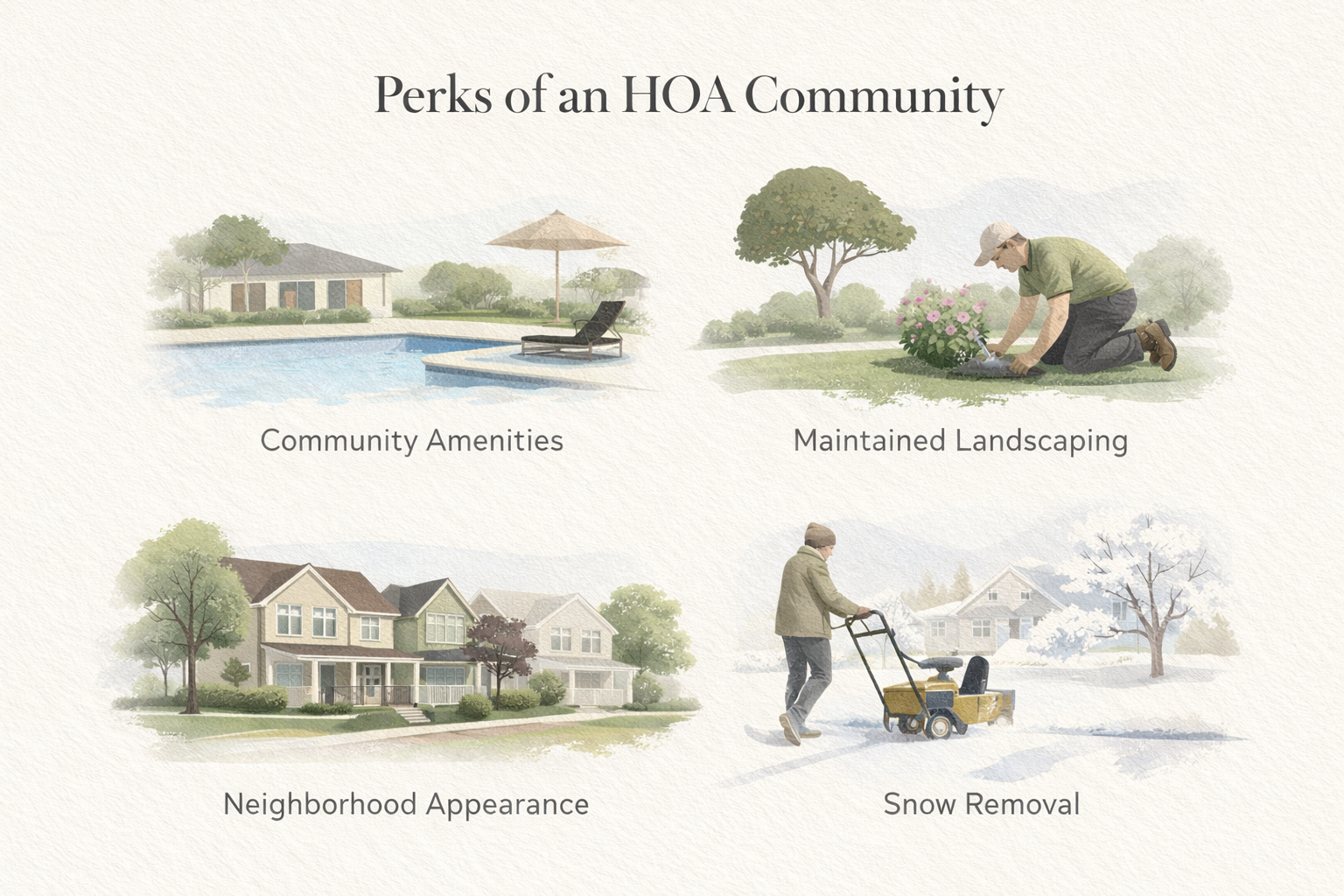
That’s why so many buyers actively want an HOA. Pools, parks, walking trails, snow removal, exterior maintenance, landscaping standards… those things don’t happen by accident. An HOA is often the structure that makes them possible.
When everyone understands the system, it tends to work really well.
How HOA Rules Actually Work
Every HOA operates based on a set of governing documents. These usually include bylaws, rules and regulations, and architectural guidelines. Think of them as the operating manual for your community.
Most homeowners don’t run into issues because they’re doing something wrong. It’s usually because they didn’t realize a guideline existed. Paint colors. Fence styles. Parking expectations. Landscaping timelines. These details are rarely meant to be restrictive for the sake of it. They’re there to keep the neighborhood consistent and functioning smoothly.
Once you know where to find the rules and who to ask questions to, the whole thing feels a lot less intimidating.
Communication Is the Real Key
The best HOA experiences tend to come from clear communication on both sides. Boards that explain decisions well. Homeowners who ask questions early instead of assuming. When expectations are clear, things stay calm and collaborative.
Utah has also continued to improve homeowner education and support around HOA governance, which helps everyone stay on the same page. The goal isn’t to create tension. It’s designed to help communities operate transparently and fairly, so homeowners feel informed, not confused.

What This Means for You as a Homeowner
If you already live in an HOA community, your biggest advantage is knowledge. Knowing how your association is structured. Understanding what’s handled by the HOA versus what’s your responsibility. Knowing how decisions are made and how to be involved if you want to be.
And if you ever buy another home in the future, this awareness will make the process even smoother. You’ll know what questions to ask. You’ll know what documents to review. You’ll know how to evaluate whether a specific HOA fits your lifestyle.
That’s not a downside. That’s empowerment.
A Final Thought
HOA communities are a significant part of homeownership in Northern Utah, and for many people, they’re a big reason their neighborhood feels peaceful, well-maintained, and stable. Like anything else, they work best when homeowners understand how they function.
If you’ve ever wondered how your HOA operates, what certain guidelines mean, or how this all plays into future buying or selling decisions, I’m always happy to talk it through with you. Sometimes a quick conversation is all it takes to turn uncertainty into clarity.