
First-Time Buyer in Utah? Cost, Steps & Timeline

If you’re buying your first home in Utah, the two biggest questions are usually the same: How much is this actually going to cost me, and what do I do first? The short answer is that your monthly payment depends on your loan, down payment, interest rate, taxes, insurance, and sometimes HOA dues — and the process usually starts with your budget and pre-approval before you ever start touring homes.
Here’s what that looks like in real life for first-time buyers in Northern Utah.
How Much Does It Cost to Buy a Home in Utah?
There are really two numbers you need to understand:
1. What you need upfront
2. What you’ll pay each month
They are not the same thing.
A buyer could potentially purchase with a relatively small down payment but still have a monthly payment that feels uncomfortable. On the other hand, someone may have plenty saved but choose a lower price point because they want more room in their monthly budget.
The goal is not simply to figure out what a lender will approve.
It’s to figure out what payment actually works for your life.
What Goes Into Your Monthly Mortgage Payment?
Your monthly housing payment can include:
- Principal
- Interest
- Property taxes
- Homeowners insurance
- Mortgage insurance, depending on your loan
- HOA dues, if the property has an HOA
That means two homes listed at the same price can still have different monthly costs.
A condo with significant HOA dues, for example, may cost more each month than a similarly priced townhome or single-family home without an HOA.
Property taxes and insurance can vary too.
That’s why looking only at the listing price rarely tells you the whole story.

How Much Money Do First-Time Buyers Need Upfront in Utah?
You do not necessarily need 20% down to buy a home.
That is probably one of the most common misconceptions I hear from first-time buyers.
Depending on the loan program, you may be able to buy with a much smaller down payment.
Some buyers may also qualify for down payment assistance programs.
[Insert link to past blog post about first-time buyer loans and down payment options in Utah here]
But your down payment is only one part of the upfront cost.
First-Time Buyer Costs Before Closing
Depending on the property and transaction, you may also need money for:
Earnest money: Money submitted with your offer to show you’re serious about purchasing the home. If the transaction closes, it is generally credited toward what the buyer owes at Closing. It goes toward the down payment first. If the buyer has down payment assistance, it will go toward closing costs.
Home inspection: The buyer pays this directly during the due diligence period. It’s not required, but is highly recommended.
Appraisal: If the buyer needs financing, the lender will always require an appraisal.
Closing costs: These can include lender fees, title fees, prepaid taxes, insurance, and other transaction expenses.
Some of these costs may be negotiable.
For example, depending on the market and the strength of your offer, a seller may agree to contribute toward a buyer’s closing costs.
That can make a meaningful difference for someone who has enough income to comfortably afford the payment but would rather keep more cash in savings.
Can the Seller Pay a First-Time Buyer’s Closing Costs?
Sometimes.
Seller concessions are negotiated as part of the offer and can potentially help cover certain buyer closing costs.
How much the seller can contribute depends partly on the loan program and transaction structure.
It also depends heavily on the market.
If a home has multiple aggressive offers, asking the seller for significant concessions may make your offer less competitive.
If the property has been sitting on the market and the seller is motivated, there may be much more room to negotiate.
This is one reason the strategy for buying a $600k home in Layton could look very different from the strategy for another $600k home in Salt Lake County.
Price matters.
But the circumstances surrounding the property matter too.

Step 1: Figure Out What Monthly Payment You Actually Want
Before asking, “How much house can I afford?” ask a slightly different question:
What monthly payment would still allow me to live comfortably?
That distinction matters.
A lender looks at your income, debts, credit, loan program, and other financial factors to determine what you may qualify for.
That number can be useful.
It should not automatically become your shopping budget.
If being approved for a certain price would leave you unable to save, travel, handle repairs, or comfortably manage your normal expenses, there is nothing wrong with choosing a lower price range.
In fact, that can be the smarter move.
Step 2: Talk With a Lender Before Touring Homes
You do not need to know everything before talking with a lender.
That conversation is partly how you figure everything out.
A good lender should be able to show you:
- What purchase price you may qualify for
- Estimated monthly payments at different price points
- Different loan options
- Estimated cash needed to close
- Whether down payment assistance may be worth considering
- How changing your down payment affects the payment
- How current interest rates affect your buying power
You can also ask them to compare scenarios.
For example:
“What would my payment look like at $375,000 versus $400,000?”
“What about at $400,000 with $5,000-$8,000 for a rate buydown?”
That is much more helpful than simply hearing, “You’re approved for $425,000.”
Step 3: Get Pre-Approved Before You Start Seriously Shopping
Once your lender has reviewed your finances and documentation, you can usually move toward a pre-approval.
That gives you a clearer sense of your price range and lets you submit stronger offers when you find the right home.
It also prevents one of the most frustrating first-time buyer experiences:
Falling in love with a home before knowing whether the numbers actually work.
Should You Find a Realtor or Lender First?
Either one can technically come first.
In practice, I often help buyers connect with a lender early so we can build the financial side of the plan before spending weekends looking at houses.
Your Realtor and lender should be working together.
The lender handles the financing side.
Your Realtor helps you understand homes, neighborhoods, contracts, negotiations, inspections, deadlines, and the strategy behind the purchase.

Step 4: Start Looking at Homes in Your Actual Price Range
This is where the process starts feeling real.
You’ll begin comparing not only houses, but tradeoffs.
Maybe one neighborhood gives you more square footage.
Another gives you a shorter commute.
One home may be beautifully updated but have a higher HOA.
Another may need cosmetic work but have a better lot and location.
For buyers in Davis County, Weber County, and Salt Lake County, those tradeoffs can change quickly by city and neighborhood.
A budget that feels restrictive in one area may open up considerably in another.
That’s why your search should be built around more than bedroom count.
We should also be considering your commute, monthly payment, future plans, neighborhood preferences, maintenance tolerance, and what you’re willing to compromise on.
Step 5: Make an Offer on a Home in Utah
Once you find the right property, your Realtor will help you structure an offer.
Price is only one part of it.
The offer can also include:
- Earnest money
- Financing terms
- Requested seller-paid closing costs
- Due diligence deadlines
- Financing and appraisal deadlines
- Proposed closing date
- Other negotiated terms
This is where good representation becomes especially important.
Two offers at the same price can have completely different levels of risk and completely different chances of being accepted.
What Happens After Your Offer Is Accepted?
Once you go under contract, several things begin happening at the same time.
This stage can feel fast for first-time buyers, but the process is much easier when you know what each deadline is for.
Due Diligence
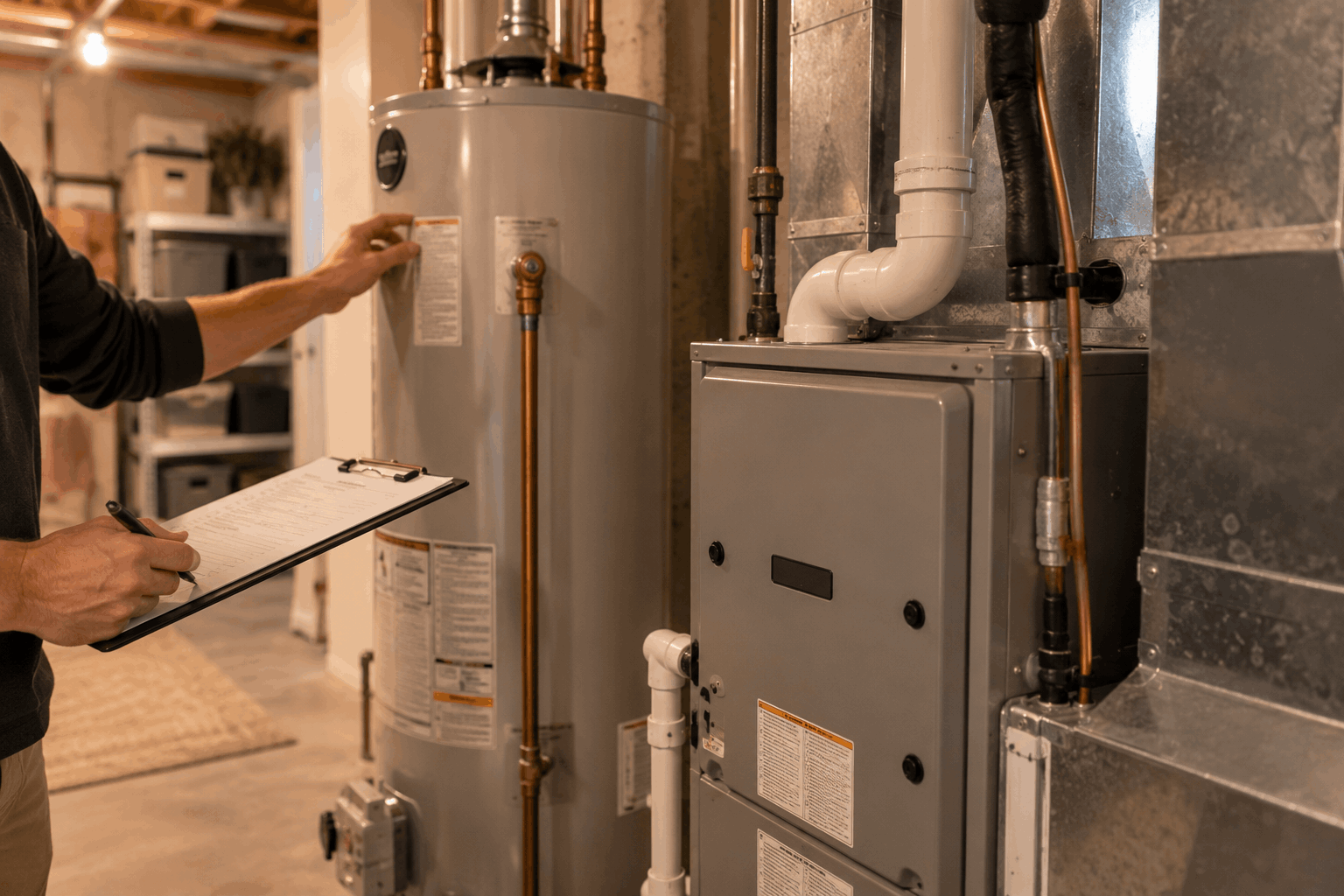
The due diligence period gives you time to investigate the home.
This is when most buyers complete a home inspection.
Depending on the property, you may also want additional evaluations.
The inspection isn’t about demanding that a seller fix every imperfection in the house.
It is about understanding what you are buying.
You may discover repairs that affect your decision, your budget, or the terms you want to negotiate.
Financing and Appraisal
Your lender continues processing your loan while the property is typically appraised.
The appraisal helps the lender evaluate the property’s value in relation to the loan.
You may also be asked for updated bank statements, pay stubs, or other documents during underwriting.
Replying quickly can help keep everything moving.
How Long Does It Take to Buy a House in Utah?
Once you are under contract, closing commonly takes several weeks.
The exact timeline depends on your financing, the contract, appraisal, title work, negotiations, and the seller’s situation.
The bigger unknown is often how long it takes to find the home.
Some buyers find something quickly.
Others shop for months.
That is not necessarily a problem.
You don’t win anything by buying the first house you tour.
The goal is to be ready when the right opportunity shows up.
A Simple First-Time Home Buyer Timeline in Utah
Here’s the process in plain English:
1. Before Shopping, set a comfortable monthly budget.
2. Talk with a lender and review loan options.
3. Get pre-approved.
4. Build your search with your Realtor and start touring homes.
5. When you find a house you love, write an offer.
6. Once accepted, complete inspections, due diligence, financing, appraisal, and title work.
7. Before Closing, complete your final walkthrough and finalize funds with your lender and title company.
8. Closing Day! Sign the final documents, complete funding and recording requirements, and receive possession according to your contract.
The process has a lot of moving pieces.
But you are not supposed to know how all of them work already.
That is what your lender, Realtor, and title team are there for.
What First-Time Buyers in Northern Utah Should Do First
If you are sitting at home looking at listings but have no idea whether you can actually buy one, you do not need to start by touring houses.
Start with the numbers.
Figure out what payment feels comfortable.
Talk through your financing options.
Then build the home search around that number.
You may discover that you are closer to buying than you thought.
You may also discover that waiting a few months, paying down a debt, or saving a little more would put you in a much stronger position.
Either answer is useful.
The goal is clarity before commitment.

Thinking About Buying Your First Home in Utah?
You do not need to have your credit score memorized, know which loan program you want, or understand every step before reaching out.
If you are considering buying in Davis County, Weber County, Salt Lake County, or elsewhere in Northern Utah, Romney House Real Estate Advisors can help you work through the numbers, connect with a lender, understand your options, and build a plan before you start making offers.
Even if you are still months away, sometimes the most useful first step is simply figuring out what the path from “maybe someday” to actually owning a home would look like.
Disclaimer
This blog is provided for general educational and informational purposes only. While Romney House Real Estate Advisors makes reasonable efforts to provide accurate and reliable information, real estate markets, lending programs, interest rates, fees, laws, regulations, and qualification requirements can change, and the information provided is not guaranteed to be complete, current, or applicable to every situation.
Nothing in this blog should be considered legal, tax, financial, lending, or accounting advice. Romney House Real Estate Advisors and its real estate licensees are not acting as mortgage lenders, attorneys, tax professionals, or financial advisors. Any examples are for illustration only and do not represent a promise of financing, approval, savings, property value, or transaction outcome.
Buyers and sellers should independently verify all information and consult the appropriate licensed professionals, including a mortgage lender, attorney, tax advisor, home inspector, appraiser, or other specialist, before making decisions. Loan terms, rates, costs, eligibility, and approval are determined by the individual lender and the buyer’s specific financial circumstances. Official written documents, including the Loan Estimate and Closing Disclosure, should be reviewed carefully.
Romney House Real Estate Advisors is affiliated with Real Broker, LLC.
Categories
Recent Posts










Emma Romney