
First-Time Buyer in Utah? Loans & Down Payments

You do not need 20% down to buy your first home in Utah. Depending on your loan type, income, credit, military eligibility, and the property itself, you may be able to buy with 3%, 3.5%, or even 0% down.
The bigger question is not, “Do I have enough saved to buy?” It is, “Which financing options actually fit my situation?”
That is where most first-time buyers should start.
How Much Do First-Time Home Buyers Need Down in Utah?
For many buyers in Davis County, Weber County, and Salt Lake County, the down payment is smaller than you might expect.
Some conventional loan programs allow eligible buyers to put down as little as 3%, while FHA loans may require as little as 3.5% down. Eligible VA buyers may be able to purchase with no down payment at all. Utah Housing down payment assistance may also help cover part — or in some cases all — of the required down payment, with certain assistance options structured so repayment is deferred until you sell, refinance, or pay off the mortgage. Qualifying USDA loans can also offer 100% financing for eligible buyers purchasing in approved rural areas.
On a $400,000 home, that could look roughly like:
- 3% down: $12,000
- 3.5% down: $14,000
- 5% down: $20,000
- 20% down: $80,000
That is a pretty significant difference.
And it is why I would never tell a first-time buyer to wait until they have 20% saved before even talking to someone.

Conventional Loans in Utah: You May Only Need 3% Down
A conventional mortgage is not a government-backed loan, and it is one of the most common financing options buyers use.
Some conventional programs allow eligible buyers to purchase with as little as 3% down. Fannie Mae's HomeReady program and Freddie Mac's Home Possible program are two examples.
You do not necessarily have to be a first-time buyer to qualify for every low-down-payment conventional option, and requirements vary by program.
What Happens If You Put Less Than 20% Down?
You will often hear buyers say they need 20% because they want to avoid PMI.
PMI, or private mortgage insurance, is generally associated with conventional loans when the borrower puts less than 20% down. It adds to the monthly housing cost, but putting less down may still make sense if it allows you to buy sooner without draining your savings.
This is one of those decisions where the math matters more than a blanket rule.
Sometimes putting 5% down and keeping cash available for moving expenses, repairs, furniture, or an emergency fund is more comfortable than putting every dollar you have into the down payment.
FHA Loans in Utah: 3.5% Down Can Be an Option
FHA loans are especially worth discussing for buyers who have limited savings or a credit profile that may not fit conventional financing as easily.
In most cases, FHA's minimum required investment is 3.5%. FHA also allows that money to come from certain approved sources, including the buyer's own funds, eligible gifts, grants, and some down payment assistance programs.
That does not mean FHA is automatically the best loan for every first-time buyer.
It simply means it is one of the options worth comparing.
Your lender should be looking at the full picture: your credit, debt, income, monthly payment, cash available, and how long you expect to own the home.
VA Loans in Northern Utah: Some Buyers Can Put 0% Down
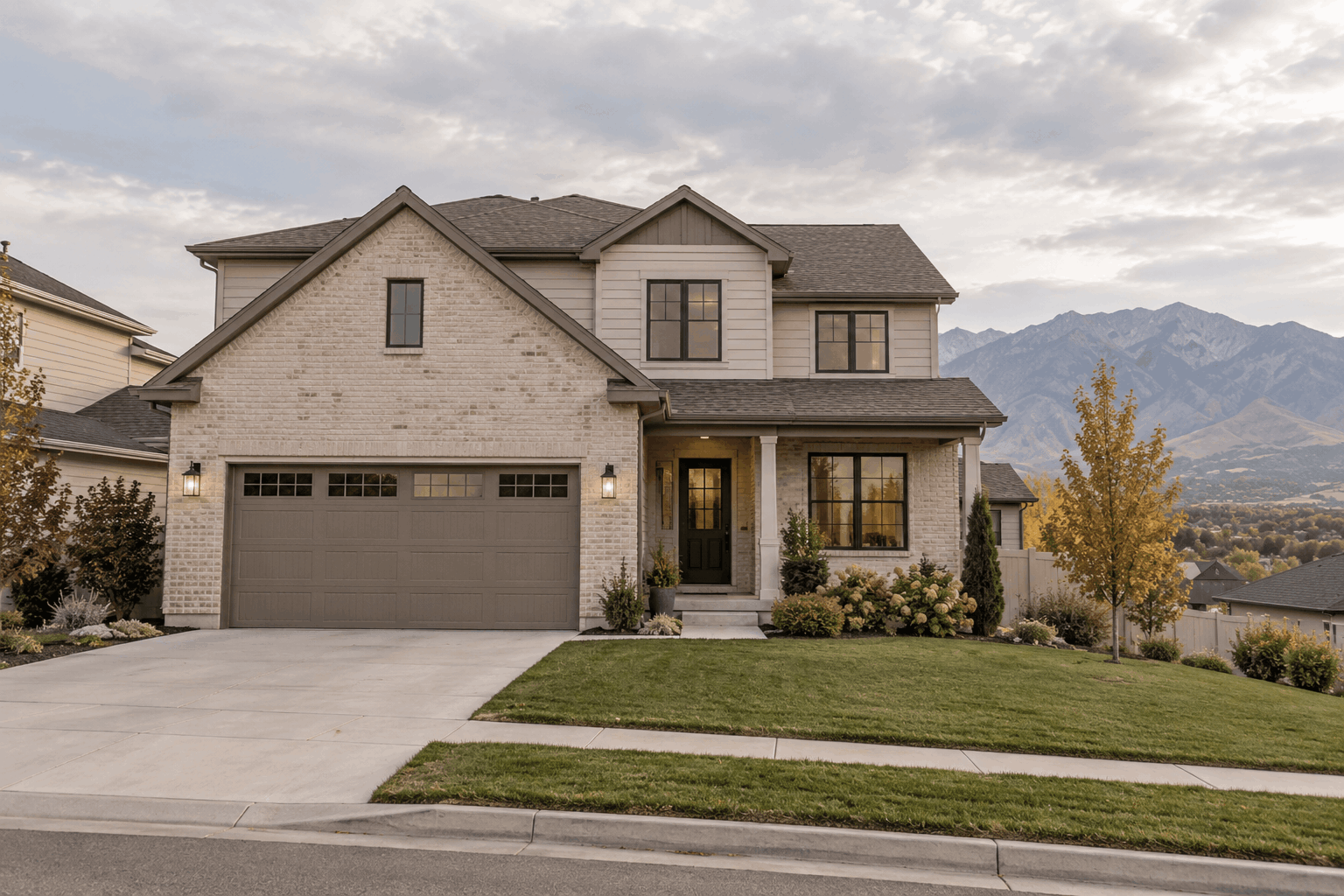
For eligible Veterans, active-duty service members, and certain surviving spouses, a VA loan can be a strong option to consider.
VA-backed purchase loans often allow qualified borrowers to buy with no down payment, as long as the purchase price does not exceed the appraised value. VA loans also do not require private mortgage insurance.
This can be especially relevant in Northern Utah because of the number of military households around Hill Air Force Base and throughout Davis and Weber counties.
Borrowers still need to meet VA and lender-specific eligibility, credit, and income requirements. Some buyers may also pay a VA funding fee unless they qualify for an exemption. The lender you choose can also affect how smoothly the process goes, so it’s worth understanding the difference between working with a bank, credit union, or mortgage lender.
USDA Loans: 0% Down May Be Available in Eligible Utah Areas
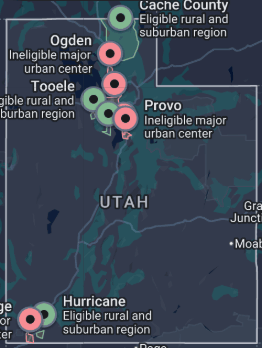
USDA financing can offer 100% financing with no down payment for qualifying borrowers purchasing in eligible rural areas.
For buyers focused on Davis County, Weber County, or Salt Lake County, USDA financing is generally not an option because those areas fall outside the program’s eligible zones.
It can still be a useful option in other parts of Utah, though. Based on the USDA eligibility map, there are eligible areas around places like Hurricane, Eagle Mountain, Tooele, and parts of Cache County.
Both the buyer and the property have to qualify, so USDA financing is something your lender should verify using the exact property address before you count on it as part of your purchase plan.
Utah Down Payment Assistance Programs Can Reduce Cash Upfront
This is where a lot of first-time buyers get confused.
Utah Housing down payment assistance is usually not a grant. In most cases, the assistance is structured as a second loan that helps cover some or all of your required down payment and, depending on the program, may also help with closing costs.
The repayment terms vary by program. Some versions require monthly payments, while others are deferred, meaning you do not make monthly payments on the assistance loan. Instead, the balance is typically repaid when you sell the home, refinance the mortgage, or otherwise pay off the first loan.
Utah Housing also offers different assistance options with their own income limits, loan requirements, property rules, and eligibility guidelines, so the right program depends on your specific situation.
There is also a separate First-Time Homebuyer Assistance Program for qualifying buyers purchasing eligible newly constructed homes. That program can provide up to $20,000 toward the down payment, closing costs, and/or a permanent interest-rate buydown, subject to eligibility and available funding.
Because programs, funding, and requirements can change, it is better to have a participating lender run your numbers than to assume you do or do not qualify based on something you read months ago.
Your Down Payment Is Not the Same as Your Total Cash to Close
This is probably the most important distinction for first-time buyers.
If your lender says you need 3% down, that does not automatically mean 3% is the only money you will need.
There can also be:
Closing Costs
These may include lender fees, title and escrow charges, prepaid taxes, homeowners insurance, appraisal costs, and other transaction expenses.
Earnest Money
Earnest money is money you put down after your offer is accepted to show the seller that you are serious about purchasing the property.
It is not an additional fee on top of your down payment. In most transactions, your earnest money is credited back to you at closing and applied toward your down payment and/or other closing costs, depending on how your loan and closing figures are structured.
How earnest money is handled if the transaction does not close depends on the terms of your purchase contract and whether you are within any applicable contingencies or deadlines.
Inspection Costs
Most buyers should also budget separately for their home inspection and any additional inspections they choose to order.
Moving and Immediate Home Expenses
Do not forget about the money you need after closing.
Moving expenses, furniture, utilities, small repairs, tools, blinds, appliances, and all the random things you suddenly discover you need can add up quickly.
This is why I would much rather see a buyer understand their total cash-to-close estimate than obsess over the down-payment percentage alone.
Can the Seller Help Pay Your Closing Costs in Utah?
Yes — and whether a seller is willing to offer concessions often comes down more to the current market than anything else.
When the market is leaning in favor of buyers — meaning there are more homes available relative to buyer demand — sellers may be more open to contributing toward a buyer’s closing costs to make their home more competitive. In a stronger seller’s market, where demand is higher and sellers have more leverage, concessions can be harder to negotiate.
This is commonly referred to as a seller concession.
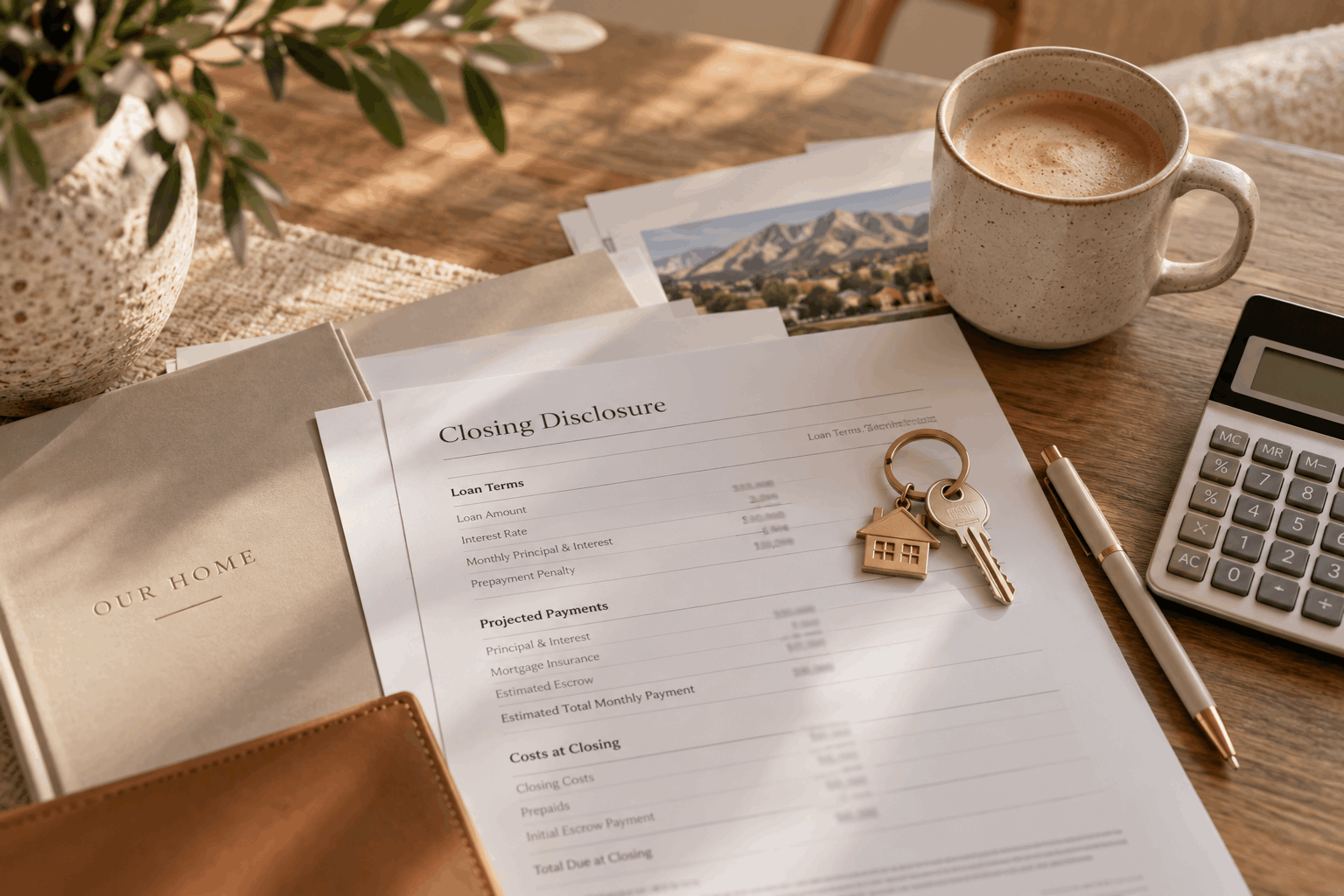
The loan program does not necessarily determine whether you can ask for concessions, but it does affect how much the seller is allowed to contribute. Conventional, FHA, VA, and other loan programs each have their own limits and rules around seller-paid costs.
Seller concessions can be especially helpful for buyers who can comfortably afford the monthly payment but would rather keep more cash in savings instead of using it all at closing.
Depending on the loan and transaction, those funds may be used toward allowable closing costs, prepaid expenses, or an interest-rate buydown.
This is where having your Realtor and lender communicate early matters. Your Realtor can look at the market, the specific property, and the seller’s negotiating position, while your lender can confirm exactly how much assistance your loan program allows.
What Credit Score Do You Need to Buy a Home in Utah?
There is no single universal minimum score for every mortgage.
Different programs have different requirements, and lenders may also have their own standards.
For FHA-insured financing, HUD notes that buyers with qualifying credit may be eligible for the 3.5% minimum investment structure, but lender requirements can still be stricter than the program minimum.
Conventional loans, VA loans, USDA loans, and assistance programs all have their own qualification criteria.
This is why searching “What credit score do I need to buy a house?” can only take you so far.
Two buyers with the same credit score can still qualify very differently depending on their income, debt, savings, employment history, loan type, and monthly obligations.
What Does a Mortgage Lender Look at Besides Credit?
Your credit score matters, but it is only one piece.
A lender is generally looking at things like:
- Income
- Employment history
- Monthly debt payments
- Credit history
- Available cash
- Down payment
- Loan type
- Property type
- Debt-to-income ratio
Your debt-to-income ratio, or DTI, compares your monthly debt obligations to your income.
That number can have a major effect on how much you qualify for.
But qualifying for a certain payment and actually being comfortable with that payment are two different things.
I tell buyers to pay attention to both.
Should You Talk to a Realtor or Lender First?
You can talk to either one first.
But before you seriously start touring homes, you should have a lender review your finances and give you a realistic pre-approval range.
A good Realtor can help connect you with lenders who understand the programs available in Utah and know how to explain the numbers without making everything feel unnecessarily complicated.
Then the Realtor and lender can work together around the same goal: finding a house that fits both your lifestyle and your actual budget.

What Should You Do First If You Want to Stop Renting?
Do not start by scrolling Zillow for six months.
Start by getting numbers.
Ask a lender to show you a few different scenarios.
What would buying with 3% down look like?
What would 5% look like?
Do you qualify for FHA, conventional, VA, USDA, or Utah down payment assistance?
What would the monthly payment actually look like?
Could seller concessions help lower the monthly payment?
What would your estimated cash to close be?
Once you know those numbers, the whole process becomes much less abstract.
You may find out you are closer to buying than you thought.
Or you may learn that you need six months to pay down a credit card, improve your credit, or build your savings.
Either answer is useful.
Buying Your First Home in Davis, Weber, or Salt Lake County
The financing is only one part of the decision.
A budget that works comfortably in one part of Northern Utah may give you very different options somewhere else.
A buyer looking in Ogden or parts of Weber County may have a very different search than someone focused on Farmington, Layton, Bountiful, Salt Lake City, or the east side of Salt Lake County.
That is where the loan conversation and the home search need to happen together.
You should know what you qualify for, what you actually want to spend, and what that budget realistically buys in the areas you are considering.
You Do Not Need to Know Everything Before You Start
Most first-time buyers do not show up knowing the difference between FHA and conventional loans, what earnest money does, or how much cash they need at closing.
You are not supposed to have the entire process figured out before your first conversation.
You just need a starting point.
If you are thinking about buying your first home anywhere in Davis County, Weber County, Salt Lake County, or the surrounding Northern Utah area, Romney House Real Estate Advisors can help you look at the process, connect with the right lender, and figure out what buying would realistically look like for you.
No pressure to be ready. Sometimes the first step is simply getting the numbers and making a plan.
FAQ About Buying Your First Home in Utah
How much do first-time home buyers need for a down payment in Utah?
It depends on the loan program. Some conventional loans allow eligible buyers to put down as little as 3%, FHA loans may require as little as 3.5%, and eligible VA buyers may qualify for no down payment. Utah Housing assistance may also help cover some or all of the required down payment.
Do I need 20% down to buy my first home in Utah?
No. Many buyers purchase with far less than 20% down. The right amount depends on your loan, credit, income, savings, and what monthly payment feels comfortable for you.
How does Utah Housing down payment assistance work?
Utah Housing assistance is usually a second loan rather than a grant. Some versions require monthly payments, while some deferred options may not require payments until you sell, refinance, or pay off the first mortgage.
Are USDA loans available in Davis, Weber, or Salt Lake County?
Generally, no in the more populated areas of those counties. USDA-eligible areas do exist elsewhere in Utah, including areas around Hurricane, Eagle Mountain, Tooele, and parts of Cache County.
Is earnest money an extra cost on top of my down payment?
No. Earnest money is typically credited back to you at closing and applied toward your down payment and/or other closing costs, depending on how the transaction is structured.
Can a seller help pay my closing costs in Utah?
Yes. Seller concessions are negotiable and are often influenced by current supply and demand. Your loan program determines how much the seller is allowed to contribute.
Should I talk to a Realtor or lender first?
Either is fine, but you should have a lender review your finances before seriously shopping for homes. Your Realtor and lender can then work together around your budget, financing, and home search.
Disclaimer
This blog is provided for general educational and informational purposes only. While Romney House Real Estate Advisors makes reasonable efforts to provide accurate and reliable information, real estate markets, lending programs, interest rates, fees, laws, regulations, and qualification requirements can change, and the information provided is not guaranteed to be complete, current, or applicable to every situation.
Nothing in this blog should be considered legal, tax, financial, lending, or accounting advice. Romney House Real Estate Advisors and its real estate licensees are not acting as mortgage lenders, attorneys, tax professionals, or financial advisors. Any examples are for illustration only and do not represent a promise of financing, approval, savings, property value, or transaction outcome.
Buyers and sellers should independently verify all information and consult the appropriate licensed professionals, including a mortgage lender, attorney, tax advisor, home inspector, appraiser, or other specialist, before making decisions. Loan terms, rates, costs, eligibility, and approval are determined by the individual lender and the buyer’s specific financial circumstances. Official written documents, including the Loan Estimate and Closing Disclosure, should be reviewed carefully.
Romney House Real Estate Advisors is affiliated with Real Broker, LLC.
Categories
Recent Posts







Emma Romney